
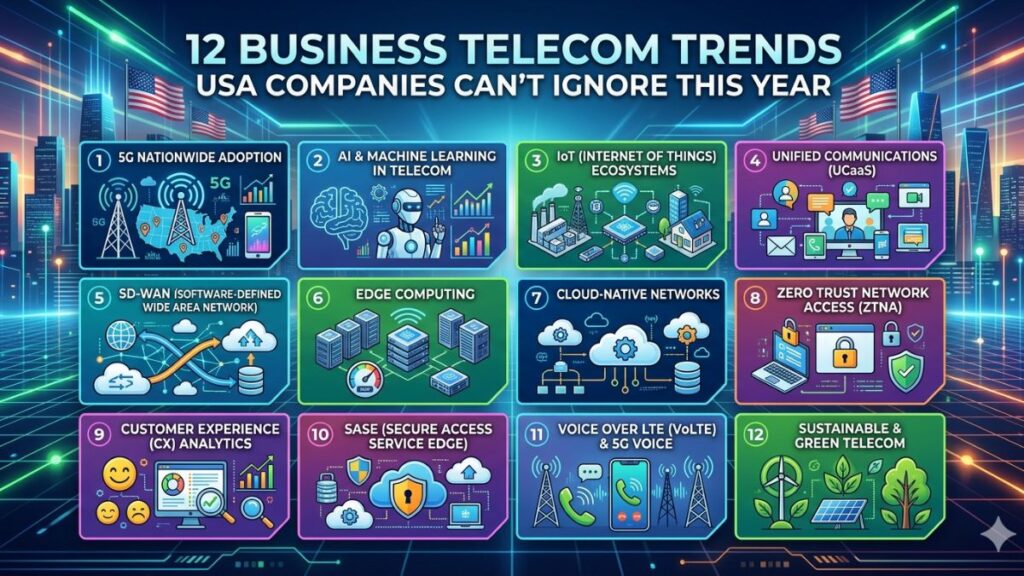
Modern companies can no longer rely on outdated communication systems. Today, fast connectivity, secure collaboration, and flexible communication tools drive customer satisfaction and operational efficiency. As digital transformation accelerates across industries, businesses are adopting smarter business telecom solutions to support hybrid work, improve customer response times, and strengthen data security.
According to the U.S. Census Bureau, remote and hybrid work models continue to influence communication infrastructure across American companies. At the same time, cybersecurity threats and rising customer expectations are forcing organizations to modernize their networks faster than ever. Therefore, businesses that fail to adapt risk slower operations, lower customer retention, and communication breakdowns.
This year, companies across the USA are focusing on scalable communication systems, AI-driven automation, and cloud-based telecom strategies. Additionally, advanced telecom solutions now support collaboration, compliance, and seamless connectivity between distributed teams. Understanding these trends helps businesses improve operational resilience while meeting modern customer demands.
Why Are Business Telecom Trends Changing So Quickly?
Business communication needs have evolved rapidly over the past few years. Hybrid workplaces, cloud adoption, and AI integration continue reshaping enterprise communication systems.
A recent report from the Federal Communications Commission (FCC) highlighted increasing demand for high-speed business connectivity and secure communication networks in the USA. As a result, organizations now prioritize:
- Network reliability
- Unified communications
- Cloud collaboration
- Mobile workforce support
- Cybersecurity readiness
- AI-powered automation
Additionally, customer expectations continue rising. Businesses must respond faster across multiple channels while maintaining consistent service quality.
For more information about broadband infrastructure in the United States, visit the official Federal Communications Commission (FCC).
1. Cloud-Based Communication Systems Continue Expanding
Cloud communication platforms remain one of the most important telecom developments this year.
Companies increasingly replace traditional phone systems with cloud-hosted communication tools because they support flexibility and scalability. Furthermore, cloud systems simplify remote collaboration and improve uptime reliability.
Why Are Businesses Moving to Cloud Platforms?
Organizations benefit from:
- Centralized communication management
- Easier remote access
- Improved disaster recovery
- Faster software updates
- Better integration with CRM tools
Research from Gartner predicts that cloud communications adoption among enterprises will continue growing significantly through 2027.
Key Benefits of Cloud Telecom Platforms
| Feature | Business Impact |
|---|---|
| Remote accessibility | Supports hybrid teams |
| Centralized dashboards | Improves communication control |
| Automatic updates | Reduces operational disruptions |
| Scalable infrastructure | Supports business growth |
2. AI-Powered Customer Communication Is Becoming Standard
Artificial intelligence now plays a larger role in customer engagement and internal communication.
Businesses use AI-driven tools to manage call routing, automate responses, and analyze customer behavior patterns. Consequently, support teams respond faster while improving customer experiences.
How Does AI Improve Telecom Operations?
AI-powered systems help companies:
- Reduce response delays
- Analyze call sentiment
- Automate customer inquiries
- Improve workflow efficiency
- Predict communication bottlenecks
According to IBM research, AI-enabled customer service systems can significantly improve issue resolution speed.
Moreover, businesses increasingly integrate AI within unified communication platforms to support scalable customer support operations.
3. Unified Communications Platforms Are Replacing Fragmented Systems
Many organizations now consolidate multiple communication tools into one unified platform. Therefore, businesses improve collaboration while reducing operational complexity.
Modern telecom solutions combine:
- Video conferencing
- Team messaging
- Voice calling
- Mobile communication
- File sharing
- Customer support integration
Why Does Unified Communication Matter?
Disconnected communication tools create inefficiencies. Employees waste time switching between platforms, which lowers productivity.
However, unified systems improve:
| Communication Challenge | Unified Communication Solution |
|---|---|
| Missed customer messages | Centralized communication hub |
| Slow internal collaboration | Real-time messaging |
| Scattered data | Integrated workflow tools |
| Remote team confusion | Shared communication channels |
Additionally, businesses using unified platforms often experience better employee engagement and faster decision-making.
4. Cybersecurity Is Now a Telecom Priority
Cybersecurity threats continue increasing across the USA. Consequently, telecom infrastructure security has become a major business priority.
According to the Cybersecurity and Infrastructure Security Agency (CISA), phishing attacks and communication-based cyber threats continue targeting businesses of all sizes.
What Security Features Are Businesses Prioritizing?
Companies now focus on:
- End-to-end encryption
- Multi-factor authentication
- Secure VoIP systems
- Zero-trust network architecture
- AI-powered threat monitoring
Why Is Secure Communication Essential?
Data breaches can disrupt operations, damage customer trust, and create compliance issues. Therefore, secure communication infrastructure supports long-term business continuity.
Businesses operating in healthcare, finance, and legal sectors particularly prioritize encrypted communication systems due to regulatory requirements.
5. 5G Connectivity Is Accelerating Business Operations
5G technology continues transforming enterprise communication capabilities across the USA.
Faster network speeds and lower latency help businesses improve:
- Video conferencing quality
- Real-time collaboration
- IoT connectivity
- Mobile workforce communication
- Smart office infrastructure
How Does 5G Improve Business Performance?
5G networks enable faster data transfer and more reliable mobile communication. As a result, companies experience smoother remote collaboration and better operational efficiency.
Industries adopting 5G rapidly include:
- Logistics
- Healthcare
- Manufacturing
- Retail
- Financial services
Additionally, smart warehouses and connected devices increasingly depend on stable 5G infrastructure.
6. Hybrid Work Models Continue Shaping Telecom Infrastructure
Hybrid work remains a permanent strategy for many American companies.
Businesses now invest heavily in communication systems that support remote employees without compromising collaboration quality.
What Do Hybrid Teams Need Most?
Hybrid workplaces require:
- Secure remote access
- Reliable video conferencing
- Mobile-friendly communication tools
- Cloud collaboration platforms
- Consistent connectivity across locations
A Microsoft Work Trend Index report showed that flexible work environments continue influencing technology investments globally.
Hybrid Work Telecom Priorities
| Priority | Operational Benefit |
|---|---|
| Video collaboration | Stronger team communication |
| Mobile accessibility | Workforce flexibility |
| Secure remote access | Improved data protection |
| Cloud integration | Better workflow continuity |
7. Customer Experience Is Driving Telecom Decisions
Businesses increasingly evaluate telecom systems based on customer experience outcomes.
Poor communication directly affects:
- Customer satisfaction
- Brand reputation
- Support response times
- Retention rates
Therefore, organizations invest in communication tools that streamline customer interactions.
What Features Improve Customer Experience?
Businesses prioritize:
- Omnichannel communication
- Faster response systems
- AI chat support
- Intelligent call routing
- CRM integration
Moreover, companies now analyze customer communication data to improve personalization and support quality.
8. Internet Reliability Is Becoming Mission-Critical
Reliable internet connectivity has become essential for business continuity.
Even short outages can disrupt:
- Sales operations
- Customer support
- Virtual meetings
- Internal communication
- Cloud application access
How Are Companies Improving Network Reliability?
Organizations increasingly adopt:
- Redundant internet connections
- SD-WAN technology
- Automated failover systems
- Network monitoring tools
Additionally, businesses operating across multiple locations now prioritize resilient connectivity strategies.
9. SD-WAN Adoption Is Growing Rapidly
Software-defined wide area networking (SD-WAN) continues gaining popularity among enterprises.
SD-WAN helps companies manage network traffic more efficiently while improving application performance.
Why Are Businesses Investing in SD-WAN?
Key benefits include:
- Better network visibility
- Faster cloud application performance
- Improved bandwidth management
- Enhanced remote connectivity
- Simplified network administration
Research from IDC indicates that SD-WAN adoption continues increasing among mid-sized and enterprise businesses across North America.
10. Data Analytics Is Improving Telecom Performance
Businesses now rely heavily on communication analytics to improve operational efficiency.
Modern telecom platforms provide insights into:
- Call performance
- Customer behavior
- Network uptime
- Employee responsiveness
- Communication bottlenecks
How Does Telecom Analytics Help Businesses?
Analytics help organizations identify communication gaps quickly. Consequently, businesses improve customer experiences and optimize workforce productivity.
Data-driven communication strategies also support better long-term planning.
11. Industry-Specific Telecom Strategies Are Expanding
Different industries now require highly specialized communication infrastructure.
For example:
| Industry | Telecom Requirement |
|---|---|
| Healthcare | HIPAA-compliant communication |
| Retail | Omnichannel customer support |
| Manufacturing | IoT connectivity |
| Finance | Secure encrypted communication |
| Logistics | Real-time tracking systems |
As industries digitize operations further, sector-specific telecom strategies continue expanding.
Additionally, businesses increasingly seek scalable telecom solutions tailored to regulatory and operational needs.
12. Sustainability Is Influencing Telecom Investments
Environmental sustainability now affects technology decisions across the USA.
Businesses aim to reduce energy consumption through smarter digital communication systems.
How Are Telecom Providers Supporting Sustainability?
Modern communication infrastructure supports sustainability through:
- Energy-efficient data centers
- Virtual collaboration tools
- Reduced travel dependency
- Cloud optimization
- Smart network management
Consequently, companies reduce operational waste while supporting environmental goals.
How Can Businesses Prepare for These Telecom Trends?
Organizations should evaluate their communication systems regularly to remain competitive.
Recommended Action Steps
- Audit existing communication infrastructure
- Strengthen cybersecurity policies
- Invest in scalable cloud platforms
- Improve remote workforce connectivity
- Monitor communication analytics consistently
- Prioritize customer communication quality
Businesses that modernize communication systems early often adapt faster to changing market demands.
Conclusion
Business communication technology continues evolving rapidly across the United States. Companies now prioritize flexibility, security, scalability, and customer experience when selecting communication infrastructure.
From AI-powered automation to cloud collaboration and 5G expansion, these trends are reshaping how organizations operate daily. Furthermore, modern business telecom solutions help companies support hybrid teams, strengthen customer engagement, and improve operational resilience.
Businesses that proactively adapt to these telecom developments position themselves for stronger productivity, better communication reliability, and long-term digital growth.
FAQs
What are business telecom solutions?
Business telecom solutions include communication technologies that support voice calls, internet connectivity, video conferencing, messaging, and collaboration within organizations.
Why are cloud communication systems becoming popular?
Cloud communication systems improve flexibility, scalability, and remote accessibility. They also simplify communication management across distributed teams.
How does 5G impact business communication?
5G improves network speed, lowers latency, and supports real-time collaboration, mobile workforces, and IoT-connected business operations.
Why is cybersecurity important in telecom infrastructure?
Cybersecurity protects sensitive business communication, customer data, and operational systems from cyber threats and unauthorized access.
What is unified communications technology?
Unified communications technology combines messaging, video meetings, phone systems, and collaboration tools into a single communication platform.
How does AI improve telecom services?
AI improves customer support, automates communication workflows, analyzes call data, and helps businesses respond faster to customer inquiries.